
UK Security Market Trends 2026 — Growth, Regulation & South Yorkshire Outlook
The UK security market is estimated at £25 billion in total turnover as of 2024, with the physical security segment projected to reach £10 billion by 2030. The sector employs approximately 450,000 SIA-licensed security officers across the UK. Growth is driven by rising commercial crime, construction and logistics expansion, digital infrastructure investment and tightening compliance requirements. Pearl Security operates within this market, providing manned guarding, mobile patrols, key holding and construction site security across South Yorkshire and the East Midlands.
Pearl Security (Ya-Fatahoo Solutions Limited) is a professional, SIA-licensed security company operating in full compliance with the Private Security Industry Act 2001. All operatives hold current SIA licences verified before each deployment. All personnel vetted to BS 7858:2019. ICO Registered: ZB986751. SIA Licence: 1014558216157759. Company No: 16175087. Registered: 249 Barnsley Road, Sheffield, S4 7AD.
Security is no longer a line item on a facilities budget. For UK businesses in 2026, it is a core operational requirement — shaped by rising crime rates, expanding digital infrastructure, tightening regulation and a construction and logistics boom that has created significant new demand for professional protection across the country.
This guide examines the UK security market in full — its size, structure, growth drivers, technology trends, regulatory landscape and the specific dynamics shaping demand across South Yorkshire, Yorkshire and the East Midlands. Whether you are a business owner evaluating your security requirements, an industry professional tracking market developments, or an international organisation seeking UK security services, this guide provides the context and intelligence you need.
UK Security Market — Size & Structure (2026)
The UK security market is one of the largest and most complex in Europe. It encompasses manned guarding, mobile patrol services, keyholding and alarm response, electronic security systems, remote monitoring, cybersecurity and specialist services including construction site security, retail security and event security.
The market divides broadly into two segments. Physical security — manned guarding, mobile patrols, keyholding, access control and CCTV — accounts for the largest share by revenue and employment. Electronic and cyber security — remote monitoring, network security, data protection and integrated systems — represents the fastest-growing segment, driven by the rapid expansion of digital infrastructure across UK businesses.
Within physical security, manned guarding remains the largest single service category — providing uniformed, SIA-licensed protection across retail, commercial, industrial, construction and logistics environments. Mobile patrol services represent the fastest-growing sub-category within physical security, driven by demand for cost-effective out-of-hours protection from small and medium-sized businesses across the UK.
UK Security Market Context: The UK physical security market is consistently one of the largest in Europe — driven by a combination of high population density, significant commercial activity, active construction and logistics sectors, and one of the most comprehensive regulatory frameworks for private security in the world. The Private Security Industry Act 2001 establishes mandatory SIA licensing for all commercial security operatives — a standard that distinguishes the UK from many other international markets.
UK Security Market Growth Drivers — 2026
Rising Commercial Crime and Expanding Risk Profiles
Commercial crime remains a primary driver of security demand across the UK. Retail theft cost UK businesses an estimated £1.8 billion in 2023, with organised retail crime increasingly targeting both large and independent retailers across the country. Construction site theft — plant machinery, copper, building materials — costs the UK construction industry over £800 million annually. Commercial burglary, vehicle crime and vandalism continue to affect businesses across all sectors and all regions.
Beyond physical crime, cyber threats are intensifying. Ransomware attacks, data breaches and phishing campaigns have made digital security a board-level concern across UK businesses. The convergence of physical and cyber risks is driving demand for integrated security models that address both threat categories simultaneously — a trend reshaping how professional security companies position their services in 2026.
UK Construction and Logistics Boom
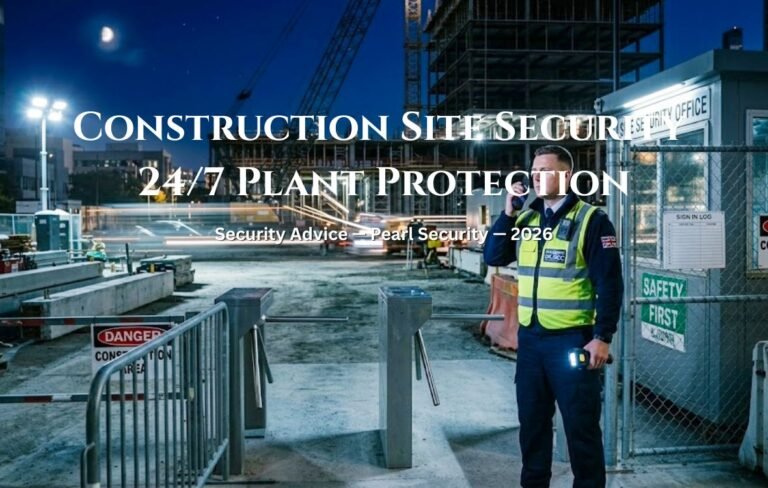
The UK construction sector is one of the most significant drivers of security demand in 2026. Major regeneration projects, residential developments, infrastructure investment and commercial construction across the country create substantial demand for specialist construction site security — protecting plant, materials and personnel on active sites around the clock.
The logistics sector is similarly driving demand. The growth of e-commerce, the expansion of major inland logistics parks — including iPort Doncaster, one of Europe’s largest — and the increasing value of freight operations have created significant overnight security requirements for warehouses, distribution centres and logistics corridors across the UK.
Tightening Compliance and Insurance Requirements
Regulatory and insurance requirements are pushing more UK businesses towards professional security solutions. Commercial insurers increasingly require documented evidence of professional security measures — including SIA-licensed keyholding, alarm response and access control — as conditions of coverage. The Construction (Design and Management) Regulations 2015 place specific security obligations on principal contractors. The Occupiers’ Liability Act 1984 creates liability exposure for unguarded premises accessed by trespassers.
These compliance pressures are driving businesses that previously managed security informally — staff members as key holders, basic alarm systems without professional response — to appoint professional, SIA-licensed security providers for the first time.
Technology Adoption and Digital Infrastructure Expansion
The rapid adoption of IP surveillance systems, biometric access control, remote monitoring platforms and cloud-based security management is transforming how security services are delivered and consumed across the UK. Businesses are moving from analogue CCTV to networked IP systems with facial recognition capability, smartphone integration and real-time alert management. This technology shift is driving new investment across the security market and creating opportunities for integrated service providers across all UK regions.
UK Government Security Investment
The UK government has committed significant investment to border infrastructure, counter-terrorism capability and national security technology — reflecting a broader focus on national protection in the post-Brexit and post-pandemic environment. This government spending, combined with the requirements of the Nationality and Borders Act 2022 and the 2023 Illegal Migration Act, has reinforced the importance of professional security services across public sector and infrastructure environments — creating additional commercial opportunities for UK security companies.
UK Security Market Regulatory Landscape
SIA Licensing — The Mandatory Standard
The Security Industry Authority (SIA) regulates the UK security industry under the Private Security Industry Act 2001. Every security operative working commercially — in manned guarding, door supervision, keyholding or CCTV operation — must hold a valid SIA licence. As of 2024, approximately 450,000 SIA-licensed operatives are employed across the UK security market.
SIA licensing is the non-negotiable baseline for any professional security operator in the UK. Always verify SIA licences independently at sia.homeoffice.gov.uk before appointing any security company. Pearl Security SIA Licence: 1014558216157759.
BS 7858:2019 — Pre-Employment Vetting Standard
The British Standard BS 7858:2019 sets out pre-employment vetting requirements for all security personnel — covering 5-year employment history verification, DBS criminal record checks, identity verification and credit checks. BS 7858 vetting is a requirement of most UK commercial insurance policies and is the industry standard for professional security companies. See our guide: How to Choose a Security Company.
UK GDPR and Data Protection Act 2018
The collection, storage and use of security data — CCTV footage, access control records, alarm response reports, key holding audit trails — is governed by the UK GDPR and Data Protection Act 2018. Professional security companies must handle all client data in full compliance with these requirements. Pearl Security is registered with the Information Commissioner’s Office — ICO Registration: ZB986751.
CDM 2015 and the Working Time Regulations 1998
The Construction (Design and Management) Regulations 2015 place specific obligations on principal contractors to prevent unauthorised site access — directly driving professional construction security demand across the UK. The Working Time Regulations 1998 govern the working hours of security officers — adding operational complexity for security companies managing overnight and weekend deployments.
Physical Security Trends in the UK — 2026
Shift from Static Guarding to Integrated Models
Manned guarding remains the foundation of physical security — but its role is evolving. Businesses across the UK are increasingly adopting hybrid models that combine SIA-licensed security officers with technology — IP surveillance, motion detection, remote monitoring and access control systems. This integration makes security operations more efficient, extends coverage across larger or more complex sites and provides better data for incident reporting and insurance compliance.
Mobile Patrols — The Fastest Growing Service
Mobile security patrol services represent the fastest-growing sub-category within UK physical security. Driven by cost consciousness among small and medium-sized businesses, mobile patrol services provide professional, SIA-licensed security visits at a fraction of the cost of full-time static guarding. For businesses with multiple sites, out-of-hours security requirements or limited budgets, mobile patrols offer the most cost-effective professional protection available.
Keyholding and Alarm Response — Mainstream Adoption
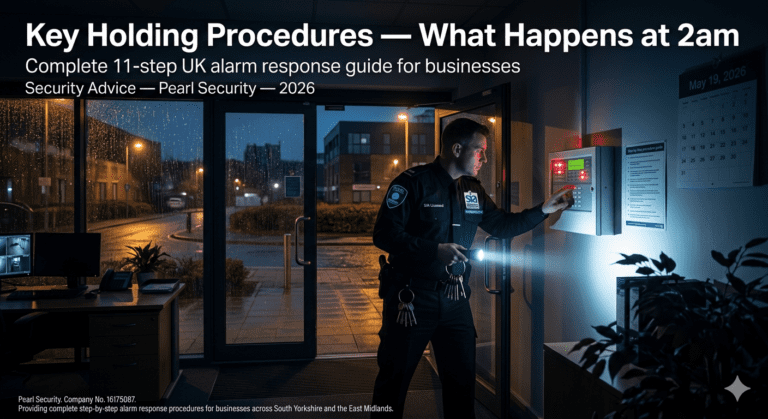
Professional key holding and alarm response services have moved from a niche offering to a mainstream requirement across the UK security market. As commercial insurance policies increasingly require professional key holders and ARC-connected alarm response, the number of businesses appointing SIA-licensed keyholding companies has grown significantly. See our guide: What is Key Holding? Complete UK Guide.
Vacant Property Security — Growing Demand
The UK’s commercial property market has produced a significant volume of vacant and void properties — from retail units left empty by high street decline to office buildings transitioning between occupiers and residential properties in development pipelines. Vacant property security — covering regular inspections, alarm response, keyholding and mobile patrols — has become one of the fastest-growing niches within the UK physical security market. See our guide: Vacant Property Security UK — Insurance Rules & Protection Guide.
UK Security Market — Sector by Sector Demand
| Sector | Primary Security Requirements | Key Risks |
|---|---|---|
| Retail | Manned guarding, loss prevention, access control | Shoplifting, organised retail crime, staff safety |
| Construction | Site guarding, mobile patrols, access control | Plant theft, metal theft, vandalism, trespass liability |
| Logistics & warehousing | Overnight guarding, perimeter security, access control | Freight theft, vehicle crime, unauthorised access |
| Commercial offices | Manned guarding, key holding, mobile patrols | Burglary, data theft, unauthorised access |
| Industrial & manufacturing | Static guarding, perimeter security, mobile patrols | Equipment theft, metal theft, vandalism |
| Healthcare | Manned guarding, access control, lone worker | Anti-social behaviour, drug theft, staff safety |
| Vacant property | Mobile patrols, key holding, alarm response | Squatters, arson, vandalism, copper theft |
UK Security Market Challenges
Workforce Supply and Vetting Pressures
The UK security industry faces significant workforce challenges in 2026. Demand for SIA-licensed operatives continues to outpace supply in many regions. The approximately 450,000 SIA-licensed officers currently employed represent a large but pressured workforce — with licensing renewal requirements, BS 7858 vetting obligations and Working Time Regulations all creating operational complexity for security companies managing large deployments.
For businesses selecting a security provider, workforce stability and vetting rigour are critical factors. A security company that cannot consistently deploy licensed, vetted operatives undermines the entire purpose of the security contract. Always confirm BS 7858 vetting in writing before any officer steps onto your premises.
Thin Margins and Competitive Pressure
The UK security industry operates on extremely thin profit margins — creating a highly competitive environment where cost pressure sometimes drives providers to cut corners on licensing, vetting and training. This is why SIA licence verification and BS 7858 confirmation are non-negotiable steps before appointing any security company across the UK market. See our buyer’s guide: How to Choose a Security Company UK.
UK Security Market — South Yorkshire & Yorkshire Perspective
South Yorkshire and the wider Yorkshire region represent one of the most active and fastest-growing security markets outside London. The combination of major construction activity, significant logistics infrastructure, large retail environments and above-average commercial crime rates creates substantial and growing demand for professional security services across Sheffield, Barnsley, Rotherham, Doncaster and Leeds.
Construction Activity — Sheffield, Rotherham, Barnsley, Doncaster
South Yorkshire is undergoing its most significant construction boom in decades. Major projects include Sheffield’s Heart of the City Phase 2 regeneration, Rotherham’s Waverley and Dearne Valley development corridors, Barnsley town centre regeneration, Doncaster’s expanding residential and commercial development pipeline and Leeds South Bank — one of the UK’s largest urban regeneration projects. Each creates direct demand for specialist construction site security protecting plant, materials and personnel overnight and through weekends.
Logistics — iPort Doncaster and the M18/M62/A1(M) Corridor
iPort Doncaster — home to Amazon, Lidl, Fellowes and major 3PL operators — is one of Europe’s largest inland logistics parks. The M18/M62/A1(M) logistics corridor connecting Doncaster, Rotherham and Leeds handles enormous volumes of high-value freight daily. Logistics security requirements across this corridor — overnight manned guarding, access control, perimeter security and freight theft prevention — represent a significant and growing segment of the South Yorkshire security market. See our Doncaster security page.
Advanced Manufacturing — Rotherham AMP at Waverley
The Advanced Manufacturing Park at Waverley, Rotherham — home to Boeing, McLaren Automotive, Rolls-Royce, AMRC and the University of Sheffield — is one of the UK’s most significant advanced manufacturing clusters. High-value assets, sensitive intellectual property and specialist equipment create specialist security requirements that drive demand for professional, experienced manned guarding and mobile patrol services across the AMP. See our Rotherham security page.
Retail Security — Sheffield, Leeds and Barnsley
Meadowhall Shopping Centre, Trinity Leeds, the Victoria Quarter, Barnsley’s Alhambra Shopping Centre and Rotherham’s Parkgate Retail Park represent major retail security demand anchors across Yorkshire. Organised retail crime, shoplifting and out-of-hours break-ins drive sustained demand for professional retail security officers across the region — a market Pearl Security serves across Sheffield, Leeds, Barnsley and Rotherham.
UK Security Market — International Comparison
For international businesses operating in the UK — or international readers evaluating UK security standards against their home markets — the following comparison provides useful regulatory context:
| Country | Regulatory Body | Licensing Requirement | Market Maturity |
|---|---|---|---|
| UK | Security Industry Authority (SIA) | Mandatory national SIA licence for all commercial operatives | Highly regulated, mature |
| USA | State-level regulation — varies by state | State licensing — no federal equivalent to SIA | Large, fragmented market |
| Australia | State-based licensing bodies | State security licence required — comparable to UK model | Well-regulated, growing |
| Canada | Provincial regulation | Provincial security licence required | Regulated, mature |
| New Zealand | Ministry of Justice | Licensed under Private Security Personnel and Private Investigators Act 2010 | Regulated, smaller market |
For international businesses with UK operations, Pearl Security provides fully SIA-compliant security services across South Yorkshire and the East Midlands — meeting all UK regulatory requirements and commercial insurance compliance standards. See our Leeds and Nottingham pages for coverage details.
Choosing a Security Company in the UK Security Market
The growth and complexity of the UK security market makes provider selection increasingly important — and increasingly difficult for business buyers. With hundreds of providers operating across the country, distinguishing professional, compliant companies from those cutting corners on licensing, vetting and insurance requires a structured approach.
Pearl Security has published a complete buyer’s guide addressing this challenge: How to Choose a Security Company — Complete UK Guide. Key selection criteria include SIA licensing verification, BS 7858 vetting confirmation, public liability insurance, ICO registration and local management accountability.
✅ Pearl Security — Professional Security for South Yorkshire & the East Midlands: Pearl Security provides SIA-licensed manned guarding, mobile patrols, key holding and alarm response and construction site security across Sheffield, Barnsley, Rotherham, Doncaster, Leeds and Nottingham. ICO Registered: ZB986751. SIA Licence: 1014558216157759. Company No. 16175087. Call +44 (0) 7481 153593 for a free consultation.
Protect Your Business in the UK Security Market
Pearl Security provides professional, SIA-licensed security services across Sheffield, Barnsley, Rotherham, Doncaster, Leeds and Nottingham. Free site assessment available — no obligation.
FAQs — UK Security Market 2026
How big is the UK security market?
The UK security market is estimated at approximately £25 billion in total annual turnover as of 2024. The physical security segment alone is projected to reach £10 billion by 2030. The UK cybersecurity market is forecast to grow at 13% annually through 2030. The sector employs approximately 450,000 SIA-licensed security officers across the UK.
How is the UK security industry regulated?
The UK security industry is regulated by the Security Industry Authority (SIA) under the Private Security Industry Act 2001. All commercial security operatives must hold a valid SIA licence. Companies must also comply with BS 7858:2019 vetting standards, UK GDPR data protection requirements and sector-specific legislation including CDM 2015 for construction security and the Working Time Regulations 1998 for staff deployment.
What is driving growth in the UK security market in 2026?
Key growth drivers include rising commercial crime rates, the UK construction and logistics boom, tightening insurance and compliance requirements, rapid technology adoption — particularly IP surveillance and remote monitoring — UK government security investment, and increasing business awareness of integrated physical and cyber security risks.
How does UK security licensing compare to the USA, Australia and Canada?
The UK operates a national mandatory licensing system through the SIA — all commercial security operatives must hold a valid SIA licence regardless of location or employer. The USA has state-level licensing with no federal equivalent. Australia and Canada operate state and provincial licensing systems broadly comparable to the UK model. New Zealand licenses security personnel under the Private Security Personnel and Private Investigators Act 2010.
What security services are in highest demand in South Yorkshire?
In South Yorkshire, the highest demand in 2026 is for construction site security — driven by major regeneration projects across Sheffield, Rotherham, Barnsley and Doncaster — logistics security across the iPort Doncaster and M18/M62 corridor, retail security across Meadowhall, Parkgate and Frenchgate, and manned guarding for commercial and industrial premises. Pearl Security provides all of these services across Sheffield, Rotherham, Barnsley, Doncaster and Leeds.
What is the SIA and why does it matter for UK businesses?
The SIA (Security Industry Authority) is the UK government body that regulates the private security industry under the Private Security Industry Act 2001. It issues and manages SIA licences for all commercial security operatives. For UK businesses, the SIA licence is the fundamental quality and compliance benchmark — any security operative without a current, valid SIA licence is working illegally. Always verify SIA licences at sia.homeoffice.gov.uk before appointing any security provider.