Vacant Property Security UK — SIA Requirements, Insurance & How to Protect Empty Buildings (2026)
Vacant property security combines physical deterrents, scheduled mobile patrols, and professional key holding with alarm response to protect empty commercial buildings. UK insurers require weekly inspections, a monitored alarm, and documented visit reports from a competent provider. Without these, your cover reduces or voids after 30–60 days of vacancy. Pearl Security provides SIA-licensed vacant property security across Sheffield, Rotherham, Barnsley, Doncaster, and Leeds. Call +44 (0) 7481 153593 for a tailored quote based on your property’s risk profile.
Under the Occupiers’ Liability Act 1984, you retain a legal duty of care to trespassers on vacant property. Professional security inspections that identify and document hazards are your primary legal defence. All Pearl Security vacant property patrols include hazard identification and documented reporting. Our inspection reports are formatted to satisfy UK commercial property insurers including Aviva, AXA, Zurich, and NFU Mutual. SIA Licence: 1014558216157759. Company No: 16175087.
An empty building is not a dormant asset. It is a liability that grows more expensive every week it sits unsecured. UK insurers report that vacant property claims run 73% higher than occupied premises. Most standard commercial policies reduce cover or void it entirely after 30 days unless specific security measures are in place.
This guide covers what vacant property security actually requires in 2026 — real-world insurance rules, legal obligations, inspection standards, and the questions to ask any security provider before handing over your keys. Whether you own a single empty retail unit in Sheffield or manage a portfolio of unoccupied commercial buildings across South Yorkshire, this is what you need to know before your insurer asks questions you cannot answer.
Understanding the full scope of manned guarding and professional key holding helps explain why vacant properties need a layered approach — not just a padlock and hope. We also recommend reading our guide on how security company pricing works to understand what factors influence your quote.
What Vacant Property Security Actually Means
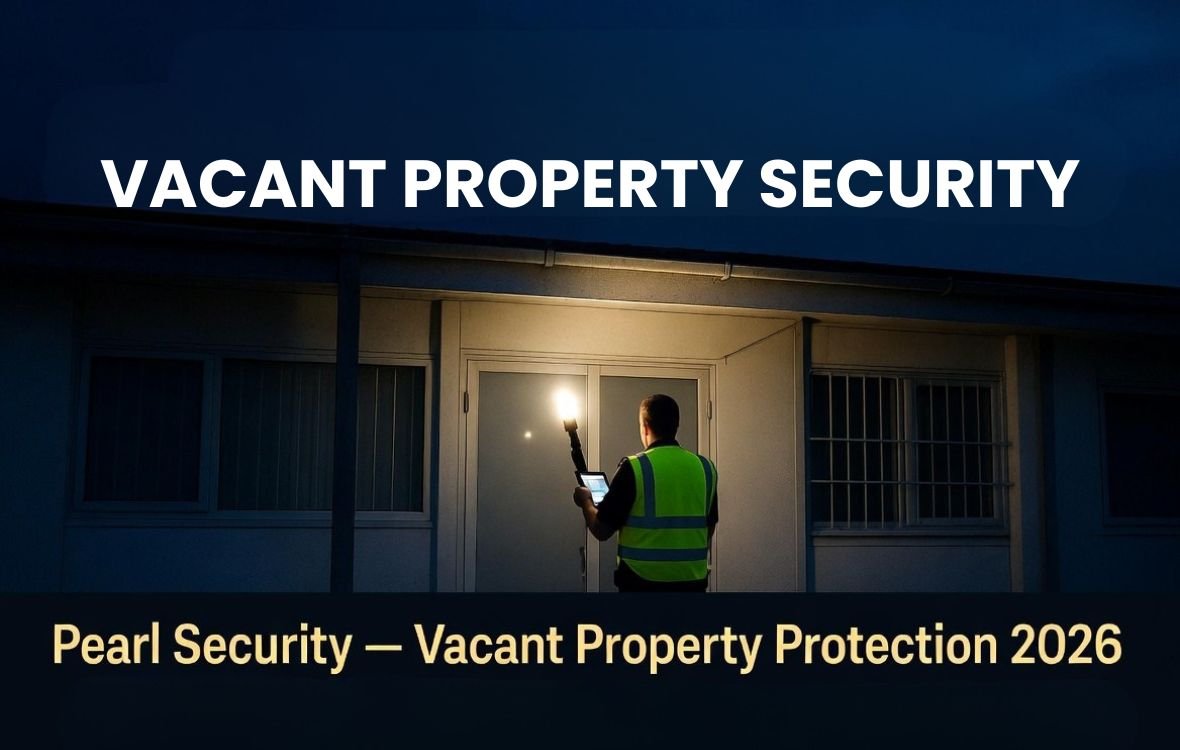
Vacant property security is the combination of physical deterrents, scheduled inspections, and rapid alarm response that protects an empty building from theft, vandalism, arson, squatting, and weather damage — while satisfying insurer requirements and your legal duty of care. It is not one service. It is three layers working together.
Layer 1 — Physical security. Steel security doors, window boarding or grilles, anti-climb perimeter measures, and monitored alarm systems. If a building is easy to enter, everything else is damage control. Layer 2 — Scheduled mobile patrols. SIA-licensed officers visit at randomised intervals, checking all entry points, verifying alarms, and logging every visit digitally. Read our full mobile patrols service page for details. Layer 3 — Alarm response and key holding. When the alarm activates, a professional key holder attends, inspects, secures, and reports — meeting the insurer-mandated response requirement that police will not fulfil for unconfirmed activations. See our key holding services for full procedures.
Skip any one layer, and you create a gap that insurers notice and intruders exploit. A monitored alarm with no key holder to attend is a noise complaint waiting to happen. Patrols without physical security are a visual deterrent that ends when the officer leaves. Physical security without patrols means no one knows the door has been forced until Monday morning.
UK Insurance Requirements for Vacant Properties
Insurance is the primary reason property owners search for vacant property security. Without it, a fire, flood, or break-in becomes your financial problem entirely.
Standard commercial property insurance policies in the UK include a vacancy clause. The specifics vary by insurer, but the industry standard is consistent: if a property is unoccupied for more than 30 consecutive days — or 60 days with some specialist policies — cover reduces significantly or ends unless you meet specific conditions. We cover insurance-driven pricing considerations in our residential and commercial patrol costs guide.
Those conditions almost always include:
- Weekly internal and external inspections conducted by a competent person
- A maintained and monitored intruder alarm system
- All entry points secured to insurer-specified standards
- Utilities isolated or maintained at safe levels to prevent frost or fire damage
- Written records of every inspection, with date, time, findings, and corrective actions
- Immediate reporting and repair of any security breach or damage
⚠️ Insurance Warning: Failing to meet vacancy conditions does not just mean your claim gets rejected. It means your insurer can void the policy entirely, leaving you personally exposed for any third-party injury or damage that occurs on the premises. Under the Occupiers’ Liability Act 1984, you still owe a duty of care to trespassers. If someone breaks in and injures themselves, you can be sued — with no insurance backing. Professional key holding and mobile patrol services directly address these insurer requirements.
Pearl Security provides insurer-compliant inspection reports formatted specifically to satisfy UK commercial property insurers. Every visit is GPS-tagged, time-stamped, and available in your client portal within 24 hours.
Vacant Property Security Services — What You Can Expect
The exact service package depends on your property type, location, risk profile, and insurer requirements. What follows are the service components Pearl Security provides. Contact us for a tailored quote based on your specific property.
Mobile Patrols for Vacant Properties
Our SIA-licensed officers conduct scheduled visits to your vacant property. Patrol frequency is determined by your insurer’s requirements and the property’s risk level. We serve commercial premises across Sheffield, Rotherham, Barnsley, Doncaster, and Leeds.
| Patrol Frequency | Best For |
|---|---|
| 3 random visits per week (night) | Standard commercial vacant units |
| Daily night visit | High-risk locations, insurer-mandated frequency |
| Twice daily (day + night check) | Large premises, active renovation projects |
| Custom schedule (7–14 visits weekly) | Mixed-use buildings, phased occupation scenarios |
Key Holding and Alarm Response for Vacant Properties
When your alarm activates, a Pearl Security SIA-licensed officer attends your property — not a subcontractor. Our key holding service meets the requirements of all major UK commercial insurers. Response times under 30 minutes across our South Yorkshire coverage area.
| Service Level | Notes |
|---|---|
| Key holding only (secure storage, no response) | Minimum requirement for most insurers |
| Key holding + alarm response (up to 4 callouts/month) | Includes written incident reports after every activation |
| Key holding + unlimited alarm response | High-risk or previously targeted properties |
| Per-callout alarm response (no key holding contract) | Not recommended; insurers strongly prefer contracted service |
Combined Vacant Property Security Packages
Most clients combine patrols, key holding, and alarm response into a single package. This ensures complete insurer compliance and eliminates gaps between service providers. Our security guard cost guide for Sheffield explains how combined services typically offer better value than booking each component separately.
| Package Level | Includes |
|---|---|
| Basic vacant cover | Key holding + 3 patrols weekly + incident reporting suite |
| Standard vacant cover | Key holding + alarm response + daily patrols + full reporting suite |
| Full vacant cover | Everything above + twice-daily patrols, 24/7 alarm response, monthly condition reports, client portal access |
📞 Get a Tailored Quote: Every property is different. A grade-II listed former bank in Sheffield city centre requires a different security profile than a retail unit on a Barnsley industrial estate. Pearl Security provides bespoke quotes based on your property’s specific risk factors. Call +44 (0) 7481 153593 or request a callback — we respond within 24 hours.
Legal Obligations You Probably Have Not Considered
Vacant property ownership in the UK comes with legal responsibilities that catch many landlords and property managers off guard. Understanding these obligations is critical — and they apply regardless of whether you use our Sheffield security services or another provider.
Occupiers’ Liability Act 1984. You are liable for injuries sustained by trespassers if you knew about the danger, knew someone might come into contact with it, and failed to take reasonable steps to prevent harm. A broken window that a child climbs through and cuts themselves on — that is on you. Regular patrols that identify and report hazards are your primary defence.
Health and Safety at Work Act 1974. If you employ anyone — even contractors doing renovation work — the building is a workplace. You must ensure it is safe, including asbestos surveys, electrical safety, and safe access. Your security provider should flag obvious hazards during inspections.
Regulatory Reform (Fire Safety) Order 2005. Vacant buildings still require a fire risk assessment. Arson is one of the leading causes of vacant property damage. Your security measures — including patrols that check for signs of arson or combustible material accumulation — form part of your fire safety compliance.
Council tax and business rates. Long-term vacant commercial properties may qualify for business rates relief, but only if certain conditions are met — including that the property is actively secured and maintained. Councils increasingly challenge empty property relief claims where buildings show signs of neglect or unauthorised occupation. Read our what is key holding guide to understand how professional key management supports your compliance position.
Squatting in commercial buildings. Squatting in residential buildings became a criminal offence in 2012. Squatting in commercial buildings remains a civil matter. Removal requires a court order, which takes weeks and costs thousands. Professional mobile security patrols that prevent squatting before it starts are far cheaper than legal proceedings after the fact.
What a Professional Vacant Property Inspection Actually Covers
When Pearl Security patrols visit your vacant property, they do not just drive past and tick a box. Every inspection follows a documented 22-point checklist that satisfies insurer requirements and identifies problems early.
A standard vacant property inspection includes:
- External perimeter check — all doors, windows, gates, and fences inspected for damage or forced entry
- Internal walk-through — all rooms visited, checked for signs of occupation, leaks, pest activity, or damage
- Alarm system verification — system armed, no fault indicators, backup battery status checked where accessible
- Utilities check — water stopcock position verified, no active leaks, electrical consumer unit status logged
- Hazard identification — trip hazards, structural issues, fire risks, or anything that could create liability under the Occupiers’ Liability Act
- Photographic evidence — time and GPS-stamped photos of every room and any issues found
- Digital report submission — available in your client portal within 24 hours, formatted for insurer submission
This is what separates a professional security company from a caretaker with a torch. Your insurer wants competent inspection, not casual observation. Our key holding procedures guide details the full operational standards applied to every visit.
USA, Canada, and Australia: How Vacant Property Security Differs
Pearl Security operates in the UK, but we work with property owners and asset managers based internationally. If you own UK property from the USA, Canada, Australia, or New Zealand, here is what you need to know about how UK vacant property security compares to your home market.
🇺🇸 USA Comparison
US vacant property security relies more heavily on technology — remote video monitoring, smart sensors, and automated alert systems. UK insurers still require physical inspections in most cases. The UK also has stricter trespasser liability laws than most US states. Your US property management experience does not fully translate to UK requirements.
🇨🇦 Canada Comparison
Canadian vacant property concerns centre on weather damage — frozen pipes, ice damming, and snow-load roof collapse. UK properties face different risks: damp, mould, and opportunistic theft are the bigger threats. Canadian owners often underestimate how quickly a vacant UK property deteriorates in wet winter months without regular professional inspections.
🇦🇺 Australia Comparison
Australian property security favours remote monitoring and alarm verification due to distance. UK vacant property security is more hands-on because properties are denser, crime is more opportunistic, and insurers demand in-person attendance. Australian owners with UK property should budget for physical patrols, not just remote systems.
🇳🇿 New Zealand Comparison
Similar to Australia — distance-driven security preferences. NZ property owners holding UK assets should understand that UK insurers will not accept remote-only security for vacant commercial properties. Physical key holding and attendance are mandatory for most policies. Our complete key holding guide explains these requirements in detail.
Red Flags When Hiring a Vacant Property Security Company
Not every security company claiming to offer vacant property services actually delivers what insurers require. Here is what to watch for:
- No SIA licensing. Any company providing security services in the UK must be SIA-approved. Ask for their ACS registration number and verify it on the SIA public register. If they hesitate, walk away. Pearl Security SIA Licence: 1014558216157759.
- Vague inspection reporting. If their reports are “all OK” with no photographs, no timestamps, and no detail, your insurer will reject them. Demand to see a sample report before signing.
- Fixed-time patrols only. Criminals learn patterns. If patrols visit at the same time every night, the 30-minute window between visits becomes common knowledge. Randomised scheduling is essential for effective mobile patrol services.
- No client portal. You should expect 24/7 digital access to your inspection reports, incident logs, and compliance documentation. Paper reports that arrive by post two weeks later are not sufficient.
- Subcontracting without disclosure. Some national companies subcontract to local providers and never tell you. Ask directly who will hold your keys and who will attend your property. You want the company you hire, not an unknown third party.
- Insurance ignorance. If the company cannot name three UK insurers they routinely satisfy with their reporting format, they lack experience with vacant property requirements. This is niche knowledge — demand it. Read our security pricing guide for questions to ask any provider before signing.
Why Pearl Security for Vacant Property Protection
We are based in South Yorkshire. We hold our own keys in our own secure, BS 7858-compliant facility. Our patrol officers are directly employed, SIA-licensed, and locally based — which means response times under 30 minutes across Sheffield, Rotherham, Barnsley, Doncaster, and Leeds.
Your inspection reports are available digitally, formatted for insurer submission, and backed by a compliance guarantee: if our report format fails to satisfy your insurer’s vacant property requirements, we will revise it at no charge until it does.
Vacant property security is not a sideline service for us. It is a core part of what we do, and we do it for commercial landlords, probate solicitors, asset managers, and overseas property owners who need UK-based professional protection they can trust. See our full range of security services in Sheffield and across South Yorkshire.
Protect Your Vacant Property — Sheffield & South Yorkshire
Pearl Security provides SIA-licensed vacant property security — mobile patrols, key holding, and alarm response — with insurer-compliant reporting across Sheffield, Rotherham, Barnsley, Doncaster, and Leeds. Free, no-obligation consultation and tailored quote.
FAQs — Vacant Property Security UK
What is vacant property security?
Vacant property security combines physical deterrents, scheduled mobile patrols, and key holding with alarm response to protect empty commercial buildings from theft, vandalism, arson, squatting, and weather damage — while satisfying UK insurer vacancy requirements. Read our full guide: What is Key Holding? Complete UK Guide.
Do I need specialist vacant property insurance?
Most standard commercial property policies include a vacancy clause — typically reducing or voiding cover after 30–60 days unoccupied. You may need specialist unoccupied property insurance or a policy extension. Professional key holding and patrol services are usually conditions of maintaining cover. Contact your insurer or broker for your specific policy terms.
How often should a vacant property be inspected?
Most UK insurers require weekly internal and external inspections at minimum. Higher-risk properties or those in high-crime areas may require daily visits. Your insurer will specify the required frequency — Pearl Security tailors patrol schedules to match your policy conditions. See our mobile patrols page for service details.
What happens if my vacant property alarm activates?
With professional alarm response and key holding, a Pearl Security SIA-licensed officer attends your property immediately — conducting an external inspection before entry, investigating the cause, liaising with emergency services if required, securing the premises, and providing a written incident report. Police will not attend unconfirmed alarm activations on vacant commercial properties in most UK force areas.
Is vacant property security required by law?
There is no single law requiring vacant property security. However, the Occupiers’ Liability Act 1984 creates a legal duty of care to trespassers, and your insurance policy almost certainly imposes security conditions during vacancy. Failing to meet these is not illegal — but it exposes you to personal liability and uninsured losses. Read our related guide on manned guarding requirements.
Can I secure a vacant property myself instead of hiring a company?
You can conduct inspections yourself, but insurers typically require a competent person — which may mean a professional security provider. Self-inspections also expose you to personal risk when attending empty buildings at night. Professional SIA-licensed security services provide documented, insurer-compliant reporting that self-inspection cannot match.
How do UK vacant property security requirements compare to the USA, Canada, and Australia?
UK insurers generally require physical in-person inspections for vacant properties. US and Australian markets rely more on remote technology. Canadian requirements centre on weather damage prevention. New Zealand follows a similar distance-driven model to Australia. If you own UK property from overseas, our key holding services provide the physical presence UK insurers demand. See our international comparison section above for country-specific details.